
One of the first questions people ask when planning an event is also the one that causes the most stress. How much food do you need for a catered event? It sounds simple, yet the moment you try to answer it, the uncertainty starts to creep in. You do not want to run out of food. At the same time, you do not want trays of leftovers sitting untouched at the end of the night. Finding the right balance can feel overwhelming, especially if you have never used a catering service before.
The truth is that there is no single number that works for every gathering. Guest behavior, event style, timing, and even the mood of the celebration all affect how much people eat. That is why guessing often leads to anxiety. Instead, understanding how catered events really flow can bring a lot of peace of mind.
Why This Question Feels So Stressful for Hosts
Food is personal. When you host an event, you want guests to feel comfortable and well cared for. Running out of food feels stressful, while ordering too much feels wasteful. Many hosts also worry that guests will judge the entire event based on the catering. Because of that pressure, figuring out how much food you need for a catered event often carries more emotional weight than people expect.
Advice from friends can make that uncertainty even worse. One person insists you need far more food than you think. Another swears people barely eat. Both opinions can be true depending on the type of event, the timing, and the guest flow. Without that context, it becomes difficult to know how much food you need for a catered event, which is why so many hosts feel stuck at this stage of planning.
The Type of Event Changes Everything
The amount of food you need depends heavily on the kind of event you are hosting. A graduation open house does not behave the same way as a wedding reception. A corporate lunch moves differently than a backyard BBQ. Understanding this difference is the first step toward planning with confidence.
Graduation parties often stretch across several hours. Guests come and go, eat in waves, and sometimes return for seconds later in the day. Weddings usually involve a more defined meal window, which leads to more predictable portions. Corporate events often involve lighter eating, especially during meetings. BBQs and casual gatherings encourage grazing, which increases overall consumption.
Because of these differences, experienced caterers never use a one-size-fits-all formula. They look at how people will move, when they will eat, and how long food needs to stay appealing, and pardon the pun, cater to that (see what we did there?).
Guest Count Is Important to Figure Out How Much Food You Need For A Catered Event, But It Does Not Need to Be Perfect
Many hosts worry about locking in an exact guest count. While having a general idea helps, perfection is not required. Events rarely unfold exactly as planned. Some guests arrive early. Others show up late. A few may not come at all. At the same time, unexpected guests sometimes appear.
Instead of aiming for precision, it is more helpful to think in ranges. Planning for flexibility allows the catering event to feel relaxed rather than rigid. When food coverage feels generous, guests enjoy themselves more. When hosts stop watching the clock, the entire event feels lighter.
How Timing Affects How Much People Eat
Timing plays a larger role than most people realize. Events scheduled around mealtime naturally encourage fuller plates. Afternoon open houses often see lighter portions early and heavier eating later. Evening events usually lead to stronger appetites, especially when food becomes the main focus.
Longer events also increase total consumption. When guests know food will remain available, they feel comfortable returning for seconds. That behavior changes portion planning in meaningful ways.
This is where experience matters most. Understanding how timing and duration affect appetite helps caterers plan food that lasts without losing quality.
Why Buffet Style Changes Portion Planning
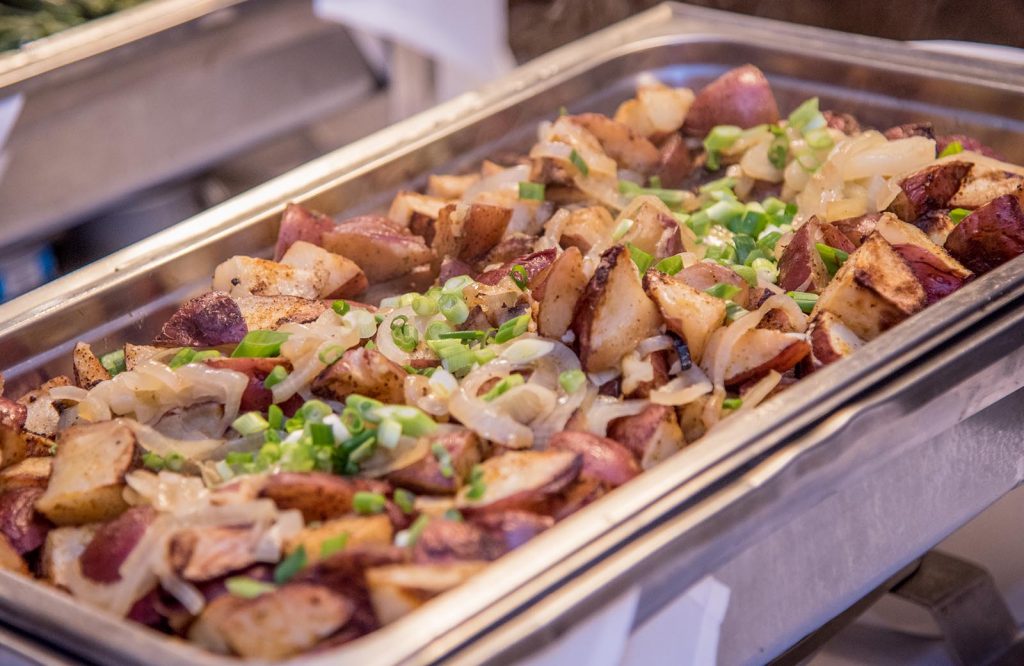
Buffet style catering creates freedom when you are deciding how much food you need for a catered event. Guests serve themselves, choose what they enjoy, and control their portions. This flexibility allows people to eat comfortably at their own pace, which is one of the biggest strengths of buffet service. At the same time, this freedom influences how much food guests take.
When people see a variety of options, they tend to sample more items. Even small portions from several dishes add up quickly. Because of this, buffet style service often requires more total food than plated meals when you are planning how much food you need for a catered event. This approach does not create waste. Instead, it ensures that choices remain available and inviting for every guest.
When you plan buffet service with experience and care, the result feels generous rather than excessive. Guests feel comfortable returning for seconds, and the event maintains a relaxed, abundant atmosphere from start to finish.
Why Estimating Food Is Easier With a Caterer
Professional caterers answer this question every day. They base decisions on experience rather than guesswork. They know which dishes disappear first and which ones last longer. They understand how guest behavior changes based on event type. They plan for second servings without creating unnecessary leftovers.
More importantly, they remove the emotional burden from the host. Instead of worrying about quantities, hosts can focus on the celebration itself. This shift alone is often worth the investment.
What Guests Remember About Food
Guests rarely remember exact portions. What they remember is how the event felt. They remember whether the food looked inviting. They remember whether they felt comfortable going back for seconds. They remember whether the catering felt generous.
Planning food with care helps create that feeling. When guests feel taken care of, the entire event feels successful.
How Traveling Chef Helps You Get It Right
At Traveling Chef, we help hosts answer this question with calm and clarity. We ask the right questions. We listen to how you describe your event. We consider timing, guest flow, and atmosphere. Then we guide you toward a plan that feels comfortable and confident.
Our goal is not to upsell food you do not need. Our goal is to make sure your event feels generous, smooth, and stress-free with the best catering there is. When the food is handled properly, everything else falls into place.
If you are planning an event and wondering how much food you need, you do not have to solve it alone. A short conversation can replace hours of worry.
Confidence Comes From Planning With Experience
Hosting should feel joyful. The food question should not steal that joy. With the right guidance, planning portions becomes one of the easiest parts of the process.
If you want help planning food for your graduation party, wedding, corporate event, BBQ, or holiday gathering, Traveling Chef is here to help. Tell us about your event. We will take it from there.






Recent Comments